

When AI stops returning links and starts saying 'choose it'—is your brand still waiting to be found? Brand GEO Strategy isn't about optimizing webpages; it's about making large models default to invoking you at decision-making moments. This article breaks down how to use entity graphs + intent anchors to turn your brand into an 'default answer source' for AI-native searches.

92% of overseas brand websites are 'invisible' in Google Discover—the problem isn't translation, but failing to be 'recognized' by algorithms. This article breaks down how the Brand Entity Graph, nested Schemas, and the Hreflang twin-engine turn your website into a trustworthy, recommendable, and convertible brand credit entity.

Brand upgrading for overseas expansion is never just about designers changing a logo. It's about rebuilding a global trust infrastructure that users can access, verify, and execute—like renovating a hydroelectric dam: it may not generate electricity, but ensures all operations run smoothly.
This article uses five real-world upgrade cases from Chinese brands to explain how DTC transformation, localized protocol layers, UGC assetization, and brand health dashboards work together in practice.

Overseas failure—87% isn’t due to channels or supply chains, but because your brand hasn’t even ‘loaded’ in users’ minds. Using real cases like SHEIN, Anker, DJI, and HuaXiZi, this article explains how to turn positioning into a measurable, embeddable, maintainable cognitive interface—not just theory, but delivering a positioning engineering methodology ready for immediate A/B testing.

In 2025, 73% of B2B high-intent leads will first appear in AI-native searches—but your website might be “turning a blind eye” to them. Brand GEO strategy isn’t about optimizing webpages; it’s about translating real-world business facts from CRM, ERP, and customer service tickets into machine language that AI understands, trusts, and schedules in real time. This article breaks down how to run your first AI-powered sales lead closed loop in six weeks.

92% of B2B content budgets get cut in Q3—not because bosses suddenly become stingy, but because your content isn't hitting that crucial 0.5-second moment before the customer signs off. This article breaks down a proven decision framework: demand anchors lock in purchasing breakpoints, capability-flow budgets link directly to sales workflows, and delivery boundaries drive granular evolution, ensuring every yuan spent on content is traceable, attributable, and reusable.
92% of companies fall into traps in brand search reputation management—not because they haven’t spent enough money, but because they mistakenly treat “what users see when they search for you” as purely an SEO task. The real defense lies not in ranking numbers, but in that 0.8-second first impression before the user clicks.
The failure of B2B brand content strategies isn't due to poor writing—it's because they're not built to be 'computable.' This article delves into the root causes behind why 92% of content remains 'invisible' in the AI era and presents a Minimal Viable Architecture that can be launched within 72 hours, yielding leads in the first week and achieving closed-loop operations within the first month.
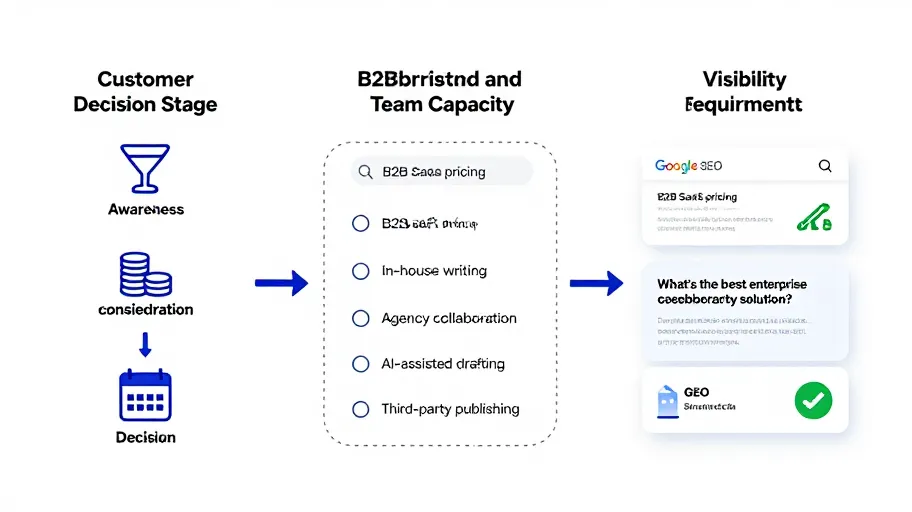
When choosing a B2B brand content strategy, don't start with "what to write," but rather with three boundary conditions: which decision-making stage your target customers are at, how much content budget and manpower you can sustain, and where you're willing to set the delivery boundaries. These three factors together determine whether you should follow a "lightweight continuous" approach, an "project-based deep-dive" approach, or a "hybrid" route. Straying from these three conditions when comparing any content strategy is likely to result in ineffective investment.


92% of Chinese brands in Southeast Asia ‘lose at first glance’—not due to poor products, but because their minds haven’t connected.
This article reveals through empirical data that the root cause of outbound brand-positioning failure lies in treating native-language cognition as a global universal interface. True positioning means rewriting a measurable, executable, and iterative localized mental contract.

