

92%的出海品牌在验收时才暴露致命断层——不是没做,而是用境内逻辑验收全球战场。这张表不是结案证书,而是你的实时作战地图,把模糊的“品牌升级效果”变成17项可测量、可归因、可迭代的硬指标。
Direct Answer: AI citation monitoring is not worth investing in for every business. If your brand terms, product terms, or industry-specific keywords have already started appearing in AI search citations, or if your customer acquisition strategy heavily relies on search and content, then systematic monitoring is worthwhile. However, if your target market users still primarily make decisions through traditional channels and AI search penetration remains limited, you can initially conduct low-frequency sampling observations without immediately launching a full-scale project. The key factor isn't whether "AI is trending," but rather whether your potential customers are using AI to ask questions related to your business.
Brand search reputation management isn’t a ‘black box’ that works immediately upon launch—it’s a sophisticated system built on real traffic, trustworthy attribution, and stable interfaces. 92% of projects fail right after going live, and the root cause isn’t algorithms, but rather neglecting these three critical steps before starting. This article uses empirical data to explain what to check, why to check, and what happens if you skip these steps.
92% of B2B content assets never reach the real decision-makers—not because they’re poorly written, but because they aren’t embedded in buyers’ actual decision-making rhythms. This article presents five immediately deployable modules that turn content from a 'communication cost' into a 'conversion lever,' shortening the sales cycle by an average of 22 days and raising lead qualification rates from 31% to 68%.
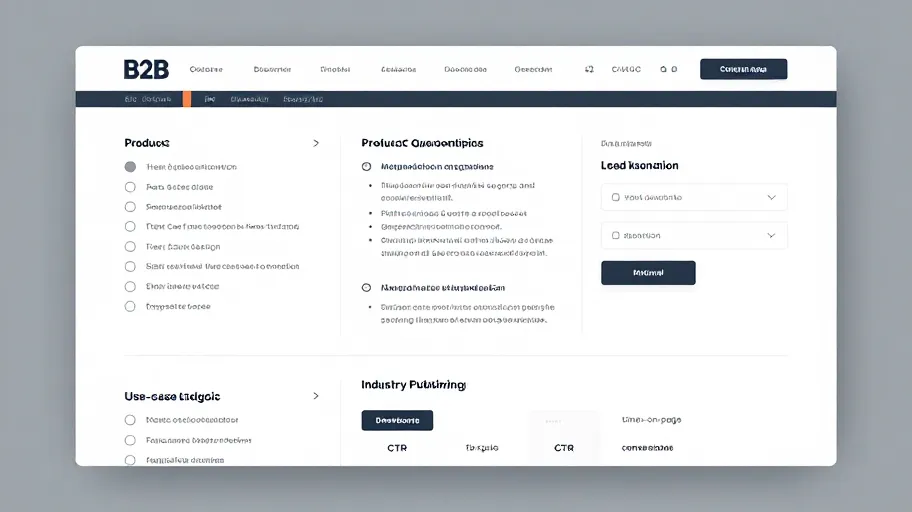
When creating content for a B2B brand going global, the most common issue isn't "whether to do it," but rather "where to start and how well each step should be executed." Here's the answer: A practical B2B brand content strategy typically consists of four key components—page structure optimized for search engines and AI indexing, a content system that establishes professional credibility, form design that lowers the barrier to inquiry, and ongoing operational activities after publication. Below, we break these down in order and provide an execution checklist to help you conduct a thorough self-assessment.

当73%用户第一次听说你,靠的是AI生成的摘要而非网页链接——你的品牌就已站在可见性悬崖边。
本文不讲SEO技巧,只拆解企业如何把官网从“被跳过”变成“被引用”,把内容从“被读取”升级为“被执行”。
When users ask AI 'How does SaaS comply with data retention?', your high-ranking blog will most likely be skipped—AI search no longer crawls web pages but recruits knowledge. This article uses real data and verifiable pathways to explain how Answer Engine Optimization (AEO) systematically enhances brand visibility and authority in AI-native searches.
When users search your name, AI directly delivers a verdict—not a summary, but a judgment. The first three lines on the first screen determine 89% of trust, while 73% never even scroll down. This article breaks down a deployable, quantifiable, zero-redline-risk search reputation defense system, helping you turn brand search results into high-conversion trust entry points.

When users search for your brand name, the top three results determine whether they trust you—not a matter of traffic, but of trust infrastructure. This article breaks down how semantic regulation, cross-platform coordination, and a four-stage automated workflow can transform the search first screen from a risk zone into a gateway of trust.
AI citation monitoring isn't tech mysticism—it's a decomposable, assignable, auditable business action. 92% of implementation failures stem from ambiguous responsibilities—this article uses a RACI matrix, semantic graphs, and a citation governance protocol to map 'who does what' onto HTML tags and CRM tickets.
B2B brand content strategy isn’t about chasing publication KPIs—it’s a depreciating, auditable, and attributable growth asset. Leading SaaS companies use it to shorten sales cycles by 2.3 weeks and boost reuse rates to 68%. This article doesn’t focus on “how to write,” but on “how to make content automatically trigger decisions in customers’ minds.”

