
When users search for your brand name, does the first page show your answer, or someone else’s interpretation? Brand GEO strategy isn’t just icing on the cake—it transforms the search entrance into a brand gatekeeper. This article uses real data to tell you who should adopt it, who shouldn’t, and how to avoid pitfalls.
When a user asks ‘how to return US FBA inventory,’ AI no longer redirects them to your blog—it generates a complete solution with templates, price comparisons, and compliance tips. If your content isn’t recognized as executable, it might as well not exist. This article uses nine real-world data points to explain how Answer Engine Optimization can boost traffic by 37% or more.

B2B brand content strategy isn't about sending press releases—it's about laying the foundation for customers' decision-making systems. 73% of procurement decisions are already formed before contacting sales—if your content doesn't make it into the projector, it hasn't entered the decision chain. This article uses verifiable data to show you how to transform content from a cost center into a schedulable, attributable, and priceable trust asset.

AI search doesn’t read webpages—it deconstructs your credibility. Brand visibility has evolved from ‘can we be found?’ to ‘are we worth citing?’ This article breaks down a four-step entity governance method to turn your official website into an authoritative source in the eyes of large models.
73% of overseas failures stem from treating 'brand overseas marketing' as mere language translation. The real breakthrough lies in resetting the first association in users’ brains—it’s not about what you say, but what they automatically recall after hearing you.
When users search for your brand name, does the first screen show not your official website, but rights-protection posts or black-hat SEO pages? This isn’t a traffic issue—it’s a loss of trust sovereignty. This article provides a five-step framework deployable on the same day, covering monitoring, suppression, generation, verification, and iteration, truly turning Baidu/WeChat/Xiaohongshu brand search pages into your growth entry points.
When users search for your name, the top three results determine whether 83% of them will click through to your official website. This isn’t post-event PR—it’s the first line of defense in the AI era—brand search reputation management is shifting from “firefighting after the fact” to “orchestrating prevention.” Below, we break down how technology can turn search results into your trusted domain.
92% of overseas official websites are completely invisible in Google Discover—not because the content isn’t good, but because AI simply hasn’t ‘seen’ you.
This article doesn’t cover website-building processes—it only breaks down how to upgrade your website from a static page to a global brand hub actively recommended by AI search engines.
In 2026, leading companies that haven’t implemented brand GEO strategies saw their authority exposure rates on the first screen of AI question-and-answer platforms plummet by 67%.
This isn’t a traffic issue—it’s a systemic loss of explanatory power, pricing authority, and user mindshare.
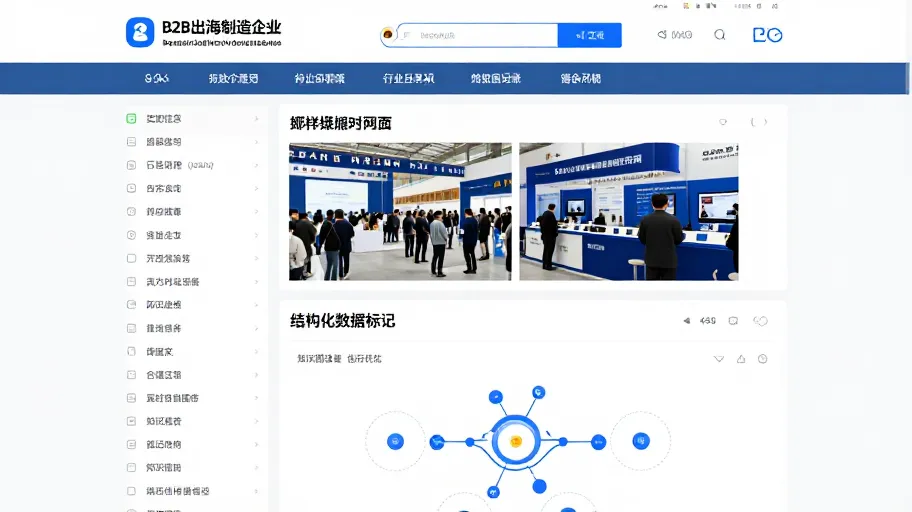
Conclusion First: Enterprise Knowledge Graph SEO is not a project worth investing in for every company. It is more suitable for those businesses that already have a substantial accumulation of content assets, whose products or brands possess verifiable public information within the industry, and who wish to be cited and recommended by AI search engines. If your independent website's content is still at the stage of "continuous production but struggling to enter the procurement decision-making sphere," then addressing the structure and authority of your content may be more urgent than directly building a knowledge graph. Whether it's worthwhile depends on your business type, data foundation, and measurement methods; this article provides you with a self-executable decision-making process.
92% of enterprise knowledge graph SEO projects get stuck on ‘who does what.’ It’s not a technical issue—it’s a broken signal chain. Using empirical data plus actionable contracts, this article helps you clarify the semantic sovereignty boundaries among content, website, and CRM within three weeks, ensuring every search brings back genuine business opportunities.

