
As consumer behavior shifts in milliseconds, traditional brand strategies can no longer keep pace. AI is reconstructing brand perception systems, enabling businesses to respond in minutes, cut costs by 40%, and accelerate growth by 2.4 times. Here’s a practical roadmap for upgrading your brand intelligence.
93.7% of potential customers slip away silently—not because sales efforts fall short, but due to systemic failures. The Enterprise AI Customer Acquisition Loop is rewriting the rules, shifting from passive response to proactive anticipation, truly achieving a 300% increase in lead conversion rates.
An AI CRM closed loop isn’t an upgrade tool—it’s about rebuilding control over growth. From passive response to proactive decision-making, discover how businesses use data flows to drive customer flows. Below is a five-step roadmap for practical implementation.
90% of high-end brands fail when expanding overseas—not because their products aren’t good, but because their positioning is wrong. Leading Shenzhen service agencies have already helped over a hundred international companies achieve brand premiums exceeding 200%. The true competitive edge lies in securing a place in the minds of your target audience.
Traditional customer acquisition is getting increasingly expensive yet delivering diminishing returns. AI is rewriting the rules—replacing guesswork with data and driving growth through algorithms. This article breaks down practical implementation paths and replicable business outcomes.
As soon as a user finishes searching for ‘Common API Integration Errors,’ your sales team has already received the task—not science fiction. Through GEO AI CRM Closed Loop Integration, businesses are turning traffic into immediate opportunities. Here’s a five-step practical roadmap.
AI-powered CRM is no longer just an automation tool—it’s the “brain” driving corporate growth. It integrates all-channel data in real-time, predicts customer behavior, and shifts service responses from “passive reaction” to “proactive action.” Behind a 30% efficiency boost lies a complete restructuring of business logic.

When a team communicates with customers across multiple channels, yet customer information remains scattered in spreadsheets, chat logs, and personal notes, the question often isn't "Should we use a tool?" but rather "When is an AI CRM truly worth investing in?" Here's a straightforward guideline: if you already have clear needs for consolidating customer data, repetitive communication processes are consuming significant team time, and you're willing to establish internal rules for data standardization, then an AI CRM is worth evaluating. On the other hand, if your customer management still revolves around a few familiar clients and relies on verbal handoffs, prioritizing the improvement of basic workflows may be more valuable than introducing a new system.
Still relying on “I think” for brand positioning? Data proves that vague strategies waste over 30% of your annual marketing budget. This article breaks down how to transform your brand into a growth engine through quantifiable, iterative customized brand positioning solutions.
In an AI-dominated information flow, brands no longer win by ranking but by whether they’re “mentioned” by AI. The content you invest in might be ignored by algorithms. The real breakthrough lies in making your brand part of AI-generated answers.
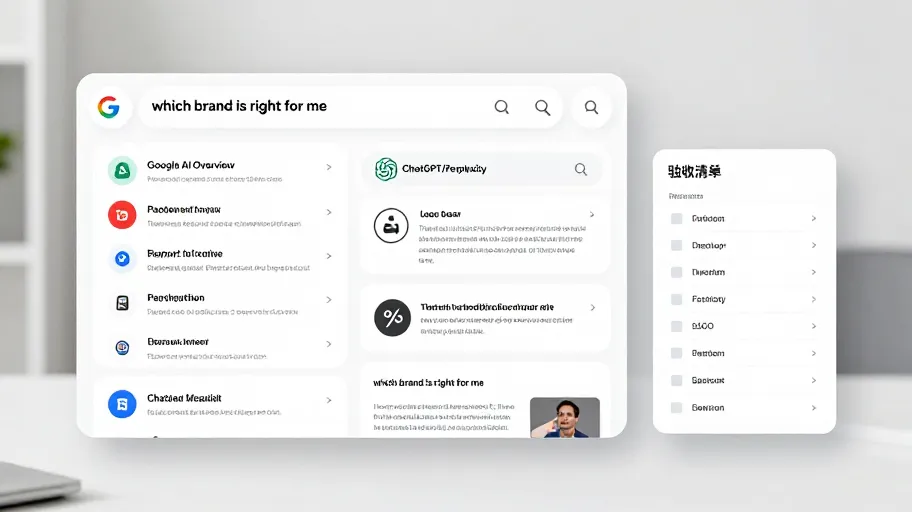
When users start asking AI search engines, "Which brand is better for me?", the battleground of brand building has expanded from web page rankings to algorithmic recommendations. The straightforward answer is this: in the AI era, brand building isn't about increasing budgets; it's about first clarifying your brand's visibility needs on Google and AI search platforms, then defining the scope of implementation, and finally using a verifiable acceptance checklist to determine whether each step warrants continued investment. This article presents a self-guided decision-making framework organized into the following sections: "Reader Context—Core Conflict—Decision Framework—Execution Checklist—Boundaries and Next Steps."

