
90% of overseas brands die at the starting line—not because their products aren’t good, but because their positioning is wrong. This article breaks down how to use page architecture, content strategy, and form design to ensure your brand is truly “understood” by international users.

70% of brands going global fail due to positioning errors. We dissected the success strategies of TikTok, Anker, and Transsion, distilling a three-dimensional positioning framework that ensures brands no longer depend on luck when venturing overseas.

When users get direct answers to their questions, is your brand still waiting for clicks? AI search is redefining traffic entry points, and traditional SEO can no longer cover new decision-making pathways. Here are breakthrough strategies leading companies are already implementing.
90% of overseas brand official websites are doomed to fail on day one. The problem isn’t design—it’s misaligned underlying strategies. Speed, payment, content, compliance, and iteration—these five major pain points are devouring your conversion rates. Here’s a replicable path to break the deadlock.

Seventy percent of overseas brand website projects either exceed budgets or face delays, with the root cause lying not in execution, but at the decision-making starting point. Unclear requirements, vague boundaries, and difficulty quantifying ROI are the three major fatal traps. This article breaks down practical selection strategies to help you avoid unnecessary detours.
AI search no longer just looks at web content—it understands user intent. To be 'seen,' brands must earn the algorithm's trust with their data.Truly effective lead growth comes from the precise resonance of geographic and behavioral data.

Your brand achieves over 500,000 monthly impressions in AI search, yet your CRM receives less than 3% of valid leads? The issue isn't traffic—it's conversion breakpoints. We dissect the complete closed-loop from visibility to sales lead generation, revealing why 97% of high-intent users are quietly slipping away.

The first step in overseas brand positioning is not to come up with a slogan, but to answer three questions: Does your target market truly recognize you? Can your budget support how deep localization should go? And at what stage do you expect the service provider to deliver? The choice of positioning should be based on clear judgments about the hierarchy of needs, budget structure, and delivery boundaries, rather than passively accepting templated solutions. This article provides a ready-to-use decision-making framework and an execution checklist.

Most overseas brands fail in their third year—not because their products are poor, but because they haven’t understood: true upgrading is a systematic battle. Using three real-world cases, we explain how technology helps brands put down roots abroad.

Traditional SEO has failed, and Answer Engine Optimization (GEO) is reshaping traffic rules. By rethinking the synergy between content, websites, and CRM, businesses can boost AI adoption rates by over 30%. The real winners aren’t those who rank highest, but those who truly understand how AI thinks.
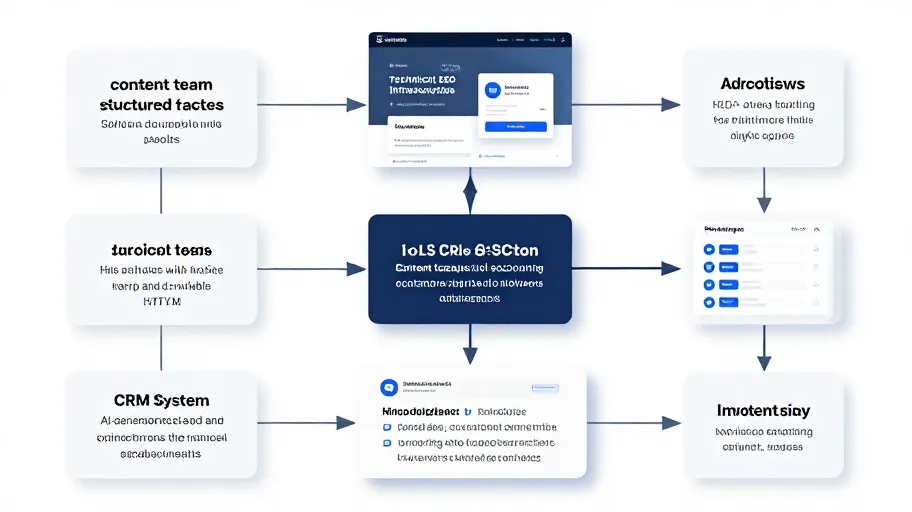
When users ask questions in AI search, is your brand cited, summarized, or silently skipped over? The challenge of implementing Answer Engine Optimization (GEO) often lies not in "whether to do it," but in "who's responsible for which part." To put it simply: the content team provides structured facts that can be cited; the website team ensures technical foundations for engine crawling and verification; and the CRM team converts inquiries from AI channels into actionable customer assets. Unclear boundaries among these three parties are a common reason why GEO initiatives fail to deliver quick results for many international brands. We've observed similar concerns surfacing in public discussions—such as "Why is my content being silently ignored in the AI search era?"—which should serve as a starting point for self-assessment rather than an established market conclusion.

